
When You Can't Feel Anything Anymore: What Emotional Numbness in Burnout Really Is
For months, I felt nothing. No sadness, no grief, not even that vague sense of gloom people mean when they say they’re “down.” Nothing. I got up, went to work, answered emails, and performed competently in meetings. On the outside, I looked like someone who had everything under control. Inside, there was just a constant buzz.
In a nutshell
Emotional numbness following prolonged stress is not a lack of feeling, but rather a state actively induced by the nervous system.
The autonomic nervous system has more than two modes: in addition to rest and fight-or-flight, it also has an older shutdown state that conserves energy when mobilization no longer works.
Numbness is therefore more of a state than an identity—and states have conditions that sustain them and conditions that change them.
When emotions return, they often come back with a vengeance. That's not a relapse.
I want to be precise
“Burnout” has become a catch-all term that, as a result, describes nothing. What I was experiencing wasn’t exhaustion. Exhaustion still has a certain quality to it: you’re tired, you’re annoyed, you’re longing for a vacation. This had no such quality. Someone could have told me I’d won the lottery or that my apartment had burned down—I would have processed both as mere pieces of information.
The worst part wasn't the numbness itself. The worst part was my assumption that it would stay that way. That some part of me had simply shut down, and that this was now who I was: a functioning human being with the volume turned all the way down.
What Actually Happens

There's something that nobody told me back then, and it would have helped me a lot.
Emotional numbness following prolonged stress is not a lack of feeling. It is a state that your nervous system actively creates—and for good reason.
The nervous system has more than two states
Most people are familiar with two: rest and digestion—and fight or flight. But there is a third, older one: a kind of shutdown response.
If a system has been on high alert for long enough and the alarm doesn’t subside, it doesn’t remain in fight-or-flight mode forever. It can’t. That’s too metabolically costly. So it shifts down a gear and conserves energy. The heart rate slows. Energy is conserves. The emotional signal is turned down a notch.
In his work on the vagus nerve, Stephen Porges describes these states as a hierarchy rather than an on-off switch—and the shutdown state as the body’s oldest protective mechanism: the one it resorts to when mobilization no longer works (Porges, The Polyvagal Theory, 2011).
Why this is a reframing and not a diagnosis
I find this perspective incredibly liberating—and I want to explain exactly why. It is neither a diagnosis nor a promise. It is a different way of framing things.
Numbness ceases to be proof that you are broken, cold, or fundamentally different from people who feel things. It becomes what it is more likely to be: a system that provides protection, at a cost, because the less costly options have been exhausted.
At some point, I couldn't read anymore. My mind stopped putting the letters on the page together to form words.
By their very nature, defense mechanisms are not permanent. That doesn't mean they dissolve on their own or according to some set plan—but the assumption I had been carrying around, that this was simply my new core personality, was wrong.
The Sunbeam

The first thing that came back was small, but it was there. A little more energy to get out of bed. A ray of sunshine on my skin that felt warm again—and it felt like something worth noticing. Not joy. Just: an awareness. Something had settled in instead of passing right through.
It didn't last. It came and went over the course of weeks. But once I noticed it, I began to realize when it was happening again—and the intervals grew shorter. The numbness lifted slowly and gently. Centimeter by centimeter. Beam by beam, the light came in.
Feelings are a heart line
When my sense of feeling returned, it came back completely—not just the surface level. I cried over things that didn’t warrant tears. I felt overwhelmed at the supermarket. Small acts of kindness blew me away.
That's when the image appeared—one I haven't been able to shake since.
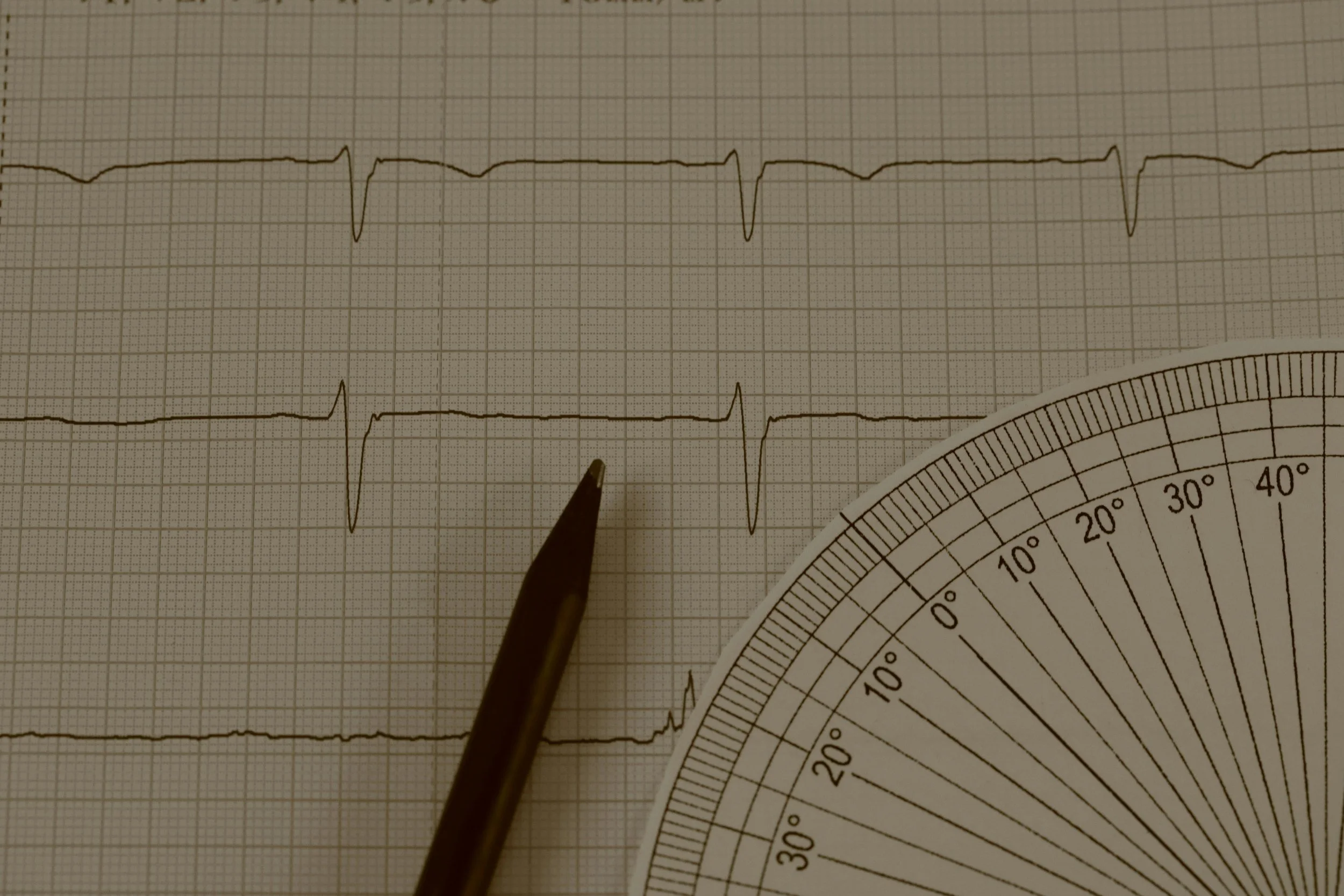
Emotions are like a heart rate. The peaks and valleys are the same signal. The flat line isn't peaceful—it's the one that sets off every alarm in the room.
I had spent years—both professionally and personally—trying to create a flatter curve. Fewer highs, so there would be fewer lows. Less reactivity. More balance. I called it professionalism. I called it resilience. In reality, I had built a nervous system with reduced amplitude. I got what I had asked for, and it almost cost me everything.
You don't just get the upper half of the curve. That's not how the mechanism works. The ability to be touched and the ability to be hurt are not two separate systems. They are one.
The Little Girl Inside Me

I am a highly sensitive person. For most of my adult life, I treated this as a flaw that needed to be managed—something to compensate for, to apologize for, and to navigate around in an open-plan office.
I don't do that anymore. Not because I've reframed it as a superpower—that framing bores me, and I don't think it's honest. But because I've stopped fighting the wiring.
The little girl inside me is an explorer. A seeker. A curious ladybug who wants to see, feel, and taste everything. The spice of life. She says “WOW” out loud when she sees mountains or when a squirrel cracks open a nut. She cries when she hears good news about other people. She’s, to be honest, quite a lot.
It’s also the reason why I notice what I notice—in myself and, today, in the women I work with. The same sensitivity that made corporate life so difficult is what makes me effective in a coaching session. Same wiring. Different context.
If you're currently going through a "deaf" phase
I'm not going to tell you that it will resolve itself according to a schedule, because I don't know that, and nobody does.
What I would say instead: Consider that it’s a state, not an identity. States have conditions that keep them in place, and conditions that set them in motion. This is a completely different issue from “this is who I am now”—and it’s one you can work through, usually with support rather than on your own.
And when the feeling returns: don't be alarmed if it comes back strongly. This isn't a relapse. It's the line that's moving again.
Frequently Asked Questions:
What does emotional numbness mean in the context of burnout? Emotional numbness describes a state in which emotions—both positive and negative—are dampened or no longer perceptible at all. Those affected often continue to function well in their daily lives, but internally experience a sense of emptiness rather than sadness. From a technical standpoint, this is classified as a protective or “shutdown” response of the autonomic nervous system, which sets in after prolonged stress when “fight or flight” is no longer an option.
Is emotional numbness the same thing as exhaustion? No. Exhaustion still has a certain quality to it: tiredness, irritability, a longing for a break. With emotional numbness, it is precisely this quality that is missing—good news and bad news are both registered as mere information.
Why don’t I feel anything anymore, even though I’m still functioning? Functioning and feeling are two different things. The nervous system can dial down the intensity of emotional signals while maintaining performance. From the outside, this often goes unnoticed—which is exactly why this condition frequently goes unnoticed for a long time.
Does emotional numbness go away on its own? There is no reliable timeline for this, and no reputable source can promise it will. By their very nature, defensive states are not permanent, but they do not resolve automatically. It is helpful to change the conditions that perpetuate the state—usually with support rather than on one’s own.
What can I do if I feel emotionally empty? A first step is to recognize this as a temporary state rather than a personality trait. Next, focus on the specific factors involved: chronic stress, sleep, time for rest and recovery, digestion, and the quality of your relationships. If symptoms persist or become overwhelming, the right first step is to seek a medical or psychotherapeutic evaluation— coaching can support this process, but it does not replace it.
Can coaching help with burnout symptoms? Coaching can help you recognize the patterns that keep your nervous system in a constant state of alert and, step by step, build routines that fit into your daily life. It is not a medical treatment and is not a substitute for diagnosis or therapy.
How I'll help you with that
I’m Petra Psenner, a Holistic Health Coach in Munich. I work with working women whose nervous systems have been in a constant state of alert for years—and I guide them on their journey out of survival mode and back to a life that feels meaningful again. In person in Munich, and online throughout German-speaking and English-speaking regions.
If you're at this point right now: In the free introductory consultation , we’ll take a look together at where you’re at, what you’ve already tried, and how I can support you. No strings attached, no pressure.
→ BOOK A FREE INTRODUCTORY CONSULTATION(Link: https://calendly.com/petra-petrapsenner/initial-free-consultation-call)

Note: This post describes personal experiences and general concepts. It is not a substitute for a medical diagnosis, treatment, or psychotherapy. If you are feeling persistently distressed, please consult your doctor or a mental health professional.